
WE RELATE FROM the Ṣaḥīḥ of al-Bukhārī that Abū Hurayrah  reported that the Messenger of Allah
  said: “Allah
  likes sneezing, but He dislikes yawning. If any of you sneeze and then praise Allah, it is the duty of any Muslim who hears them to say to them: ‘May Allah have mercy on you.’ As for yawning, it is from Shayṭān. So if any of you yawn they should suppress it as much as possible. When any of you yawn, Shayṭān laughs at them.” [1].
reported that the Messenger of Allah said: “Allah likes sneezing, but He dislikes yawning. If any of you sneeze and then praise Allah, it is the duty of any Muslim who hears them to say to them: ‘May Allah have mercy on you.’ As for yawning, it is from Shayṭān. So if any of you yawn they should suppress it as much as possible. When any of you yawn, Shayṭān laughs at them.” [1].
Yarḥamuka-llāh.
I say that the scholars hold that this means that the cause for sneezing is something praiseworthy, namely the movement of the body which is low in vitality and nourishment; and this is a recommended thing for one because it weakens the passions and makes obedience easy, whereas yawning does the opposite. And Allah knows best.
We relate in the Ṣaḥīḥ of al-Bukhārī that Abū Hurayrah related that the Messenger of Allah said: “When any one of you sneezes he should say ‘Praise be to Allah.’ His brother and his companion should reply, ‘May Allah have mercy on you.’ If they say to him ‘May Allah have mercy on you,’ he must reply ‘May Allah guide you and put straight your concerns.’” [2].The learned say that bālakum (‘your concerns’) means sha’nakum (‘your affair’).
related that the Messenger of Allah said: “When any one of you sneezes he should say ‘Praise be to Allah.’ His brother and his companion should reply, ‘May Allah have mercy on you.’ If they say to him ‘May Allah have mercy on you,’ he must reply ‘May Allah guide you and put straight your concerns.’” [2].The learned say that bālakum (‘your concerns’) means sha’nakum (‘your affair’).
Al-ḥamdu li-llāh.

Yarḥamuka-llāh.

Yahdīkumu-llāhu wa yuṣliḥu bālakum.
We relate in the Ṣaḥīḥs of al-Bukhārī and Muslim that Anas said that two men sneezed near the Prophet , and he responded to one but not to the other. The one to whom he did not respond said: “So-and-so sneezed and you prayed for mercy for him, and I sneezed, but you did not respond.” He said: “That man praised Allah but you did not praise Allah.” [3].
said that two men sneezed near the Prophet , and he responded to one but not to the other. The one to whom he did not respond said: “So-and-so sneezed and you prayed for mercy for him, and I sneezed, but you did not respond.” He said: “That man praised Allah but you did not praise Allah.” [3].We relate in the Ṣaḥīḥ of Muslim that Abū Mūsā al-Ash‘arī related: “I heard the Messenger of Allah say: ‘If any one of you sneezes and then praises Allah, [let the others] respond to him; but if he sneezes and does not praise Allah, do not respond to him.” [4].
related: “I heard the Messenger of Allah say: ‘If any one of you sneezes and then praises Allah, [let the others] respond to him; but if he sneezes and does not praise Allah, do not respond to him.” [4].We relate in the same Ṣaḥīḥs that al-Barā’ narrated: “The Messenger of Allah ordered us to do seven things and forbade us to do seven things. He ordered us to visit the sick, to follow funeral processions, to respond when people sneeze, to accept invitations, to return greetings, to help the oppressed, and to assist in fulfilling a vow.” [5].
narrated: “The Messenger of Allah ordered us to do seven things and forbade us to do seven things. He ordered us to visit the sick, to follow funeral processions, to respond when people sneeze, to accept invitations, to return greetings, to help the oppressed, and to assist in fulfilling a vow.” [5].We relate in the same Ṣaḥīḥs that Abū Hurayrah reported that the Messenger of Allah said: “The duties of a Muslim towards other Muslims are five: to respond to their greetings, to visit them when they are sick, to follow their funeral processions, to accept their invitations and to respond when they sneeze.” According to a report by Muslim he said: “The duties of a Muslim towards another Muslim are six: when you meet him you should greet him, if he invites you you should accept, if he asks you for advice you should advise him, if he sneezes and praises Allah you should ask for mercy for him, if he is sick you should visit him, and if he dies you should follow him [in the funeral procession].” [6].
reported that the Messenger of Allah said: “The duties of a Muslim towards other Muslims are five: to respond to their greetings, to visit them when they are sick, to follow their funeral processions, to accept their invitations and to respond when they sneeze.” According to a report by Muslim he said: “The duties of a Muslim towards another Muslim are six: when you meet him you should greet him, if he invites you you should accept, if he asks you for advice you should advise him, if he sneezes and praises Allah you should ask for mercy for him, if he is sick you should visit him, and if he dies you should follow him [in the funeral procession].” [6].WHAT A PERSON WHO SNEEZES SHOULD SAY; THE WORDING FOR A PERSON WHO ASKS FOR MERCY FOR HIM; AND THE THINGS ABOUT WHICH THERE IS A DIFFERENCE OF OPINION IN FIQH
The ‘ulamā’ agree that it is mustaḥabb to say after sneezing ‘Praise be to Allah.’ It is better to say ‘Praise be to Allah, Lord of the Worlds.’ It is best to say ‘Praise be to Allah in all circumstances.’

Al-ḥamdu li-llāh.
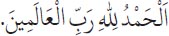
Al-ḥamdu li-llāhi Rabbi-l-‘ālamīn.

Al-ḥamdu li-llāhi ‘alā kulli ḥāl.
We relate in the Sunan of Abū Dāwūd and others, with a ṣaḥīḥ isnād, that Abū Hurayrah reported that the Messenger of Allah said: “When any of you sneezes he should say ‘Praise be to Allah in all circumstances.’ His brother or companion should say ‘May Allah have mercy on you.’ He should reply ‘May Allah guide you and put straight your concerns.’” [7].
reported that the Messenger of Allah said: “When any of you sneezes he should say ‘Praise be to Allah in all circumstances.’ His brother or companion should say ‘May Allah have mercy on you.’ He should reply ‘May Allah guide you and put straight your concerns.’” [7].
Al-ḥamdu li-llāhi ‘alā kulli ḥāl.

Yarḥamuka-llāh.

Yahdīkumu-llāhu wa yuṣliḥu bālakum.
We relate in the book of at-Tirmidhī that Ibn ‘Umar  narrated that a man sneezed next to him and said: “Praise be to Allah and blessings be upon the Messenger of Allah.” So Ibn ‘Umar said: “Do not say: ‘Praise be to Allah and blessings be upon the Messenger of Allah.’ Allah’s Messenger did not teach us to do that. He taught us to say: ‘Praise be to Allah in all circumstances.’” [8].
narrated that a man sneezed next to him and said: “Praise be to Allah and blessings be upon the Messenger of Allah.” So Ibn ‘Umar said: “Do not say: ‘Praise be to Allah and blessings be upon the Messenger of Allah.’ Allah’s Messenger did not teach us to do that. He taught us to say: ‘Praise be to Allah in all circumstances.’” [8].
Al-ḥamdu li-llāhi ‘alā kulli ḥāl.
I say that it is mustaḥabb for all those who hear one [sneeze] to say ‘May Allah have mercy on you,’ using either the singular or the plural pronoun.

Yarḥamuka-llāh.
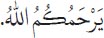
Yarḥamukumu-llāh.

Raḥimakumu-llāh.
It is mustaḥabb for the person who sneezed to say thereafter ‘May Allah guide you and set right your concerns,’ or ‘May Allah forgive us and you.’

Yahdīkumu-llāhu wa yuṣliḥu bālakum.
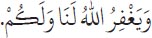
Yaghfiru-llāhu lanā wa lakum.
We relate in the Muwaṭṭa’ of Mālik from Nāfi‘ that Ibn ‘Umar said: “If any of you sneeze and someone says to him: ‘May Allah have mercy on you,’ he should reply: ‘May Allah have mercy on us and you, and may Allah forgive us and you.’” [9].
said: “If any of you sneeze and someone says to him: ‘May Allah have mercy on you,’ he should reply: ‘May Allah have mercy on us and you, and may Allah forgive us and you.’” [9].
Yarḥamuna-llāhu wa iyyākum wa yaghfiru lanā wa lakum.
All of this is Sunnah and none of it is wājib. Our colleagues say that the tashmīt, i.e. saying, ‘May Allah have mercy on you,’ is a Sunnah kifāyah, and so if one person carries it out everyone else is absolved; but it is best for each one of them to say it, because of the literal meaning of the ṣaḥīḥ hadith we have previously cited, “. . . it is a duty on every Muslim who hears him to say to him, ‘May Allah have mercy on you.’”
What we have said here about it being mustaḥabb to ask for mercy on the one who sneezes is [according to] our madhhab. The companions of Mālik differed as to whether it is incumbent. Qāḍī ‘Abd al-Wahhāb said that it is Sunnah and that one person asking for mercy suffices for a group of people, as in our madhhab. According to Ibn Muzayn, it is incumbent on every single one of them, and Ibn al-‘Arabī adopted that position.
ONE DOES NOT ASK FOR MERCY FOR PEOPLE WHO SNEEZE IF THEY DO NOT PRAISE ALLAH, EXALTED IS HE
If the person who sneezes does not praise Allah, they should not be responded to because of the preceding hadith. The minimum praise, asking for mercy and response that one should give is to raise one’s voice so that his companion may hear.
ONE SHOULD NOT ASK FOR MERCY FOR SOMEONE WHO SNEEZES IF HE DEPARTS FROM THE WORDING ‘PRAISE BE TO ALLAH’
If the person who sneezes says words other than ‘Praise be to Allah’, he should not be responded to.
We relate in the Sunans of Abū Dāwūd and at-Tirmidhī that Sālim ibn ‘Ubayd al-‘Ashja‘ī , a Companion, narrated: “While we were with the Messenger of Allah a man sneezed and said ‘Peace be upon you.’ The Messenger of Allah said ‘And on you and on your mother.’ Then he said: ‘If anyone sneezes he should praise Allah, and those who are with him should say: ‘May Allah have mercy on you.’ He should respond to them by saying: ‘May Allah forgive us and you.’” [10].
, a Companion, narrated: “While we were with the Messenger of Allah a man sneezed and said ‘Peace be upon you.’ The Messenger of Allah said ‘And on you and on your mother.’ Then he said: ‘If anyone sneezes he should praise Allah, and those who are with him should say: ‘May Allah have mercy on you.’ He should respond to them by saying: ‘May Allah forgive us and you.’” [10].
Yarḥamuka-llāh.
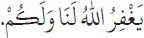
Yaghfiru-llāhu lanā wa lakum.
THE DIFFERENT VIEWS OF THE FUQAHĀ’ ABOUT SOMEONE WHO SNEEZES IN ṢALĀH
If one sneezes in ṣalāh, it is mustaḥabb for him to say: ‘Praise be to Allah’ loud enough so that he can hear himself. That is our position. The followers of Mālik have three rulings: first, this same ruling, which is that of [Qāḍī] Ibn al-‘Arabī; second, that he should praise [Allah] within himself; and third—as Ṣaḥnūn said—that he should not praise aloud or silently.
THE PERSON SNEEZING PLACING HIS HAND OR GARMENT OVER HIS MOUTH IS PART OF THE SUNNAH
It is Sunnah to put one’s hand or garment or suchlike over one’s mouth when sneezing, and to lower the voice.
We relate in the Sunans of Abū Dāwūd and at-Tirmidhī that Abū Hurayrah reported that when the Messenger of Allah sneezed he put his hand or clothes over his mouth and lowered his voice. [11].The narrator was not sure as to which of the two wordings he said. At-Tirmidhī said the hadith is ḥasan ṣaḥīḥ.
reported that when the Messenger of Allah sneezed he put his hand or clothes over his mouth and lowered his voice. [11].The narrator was not sure as to which of the two wordings he said. At-Tirmidhī said the hadith is ḥasan ṣaḥīḥ.We relate in the book of Ibn as-Sunnī that ‘Abdullāh ibn az-Zubayr reported that the Messenger of Allah said: “Allah dislikes raising the voice when yawning or sneezing.” [12].
reported that the Messenger of Allah said: “Allah dislikes raising the voice when yawning or sneezing.” [12].We relate in it that Umm Salamah  reported: “I heard the Messenger of Allah say: ‘Loud yawning and excessive sneezing is from Shayṭān.’” [13].
reported: “I heard the Messenger of Allah say: ‘Loud yawning and excessive sneezing is from Shayṭān.’” [13].SOMEONE WHO SNEEZES REPEATEDLY AND WHAT IS NARRATED ABOUT IT
If a person sneezes repeatedly, it is Sunnah to respond to him each time he sneezes, up to three times.
We relate in the Ṣaḥīḥ of Muslim and the Sunans of Abū Dāwūd and at-Tirmidhī that Salamah ibn al-Akwa‘ narrated that the Messenger of Allah heard a man sneeze near him. He said to him: “May Allah have mercy on you.” Then he sneezed again, and the Messenger of Allah said: “The man has a cold.” [14].That is the wording in Muslim’s narration. According to the report by Abū Dāwūd and at-Tirmidhī, Salamah reported: “A man sneezed near the Messenger of Allah when I was present. The Messenger of Allah said: ‘May Allah have mercy on you.’ Then [the man] sneezed twice or thrice, so the Messenger of Allah said: ‘May Allah have mercy on you. This man has a cold.’” At-Tirmidhī classed this as a ḥasan ṣaḥīḥ hadith.
narrated that the Messenger of Allah heard a man sneeze near him. He said to him: “May Allah have mercy on you.” Then he sneezed again, and the Messenger of Allah said: “The man has a cold.” [14].That is the wording in Muslim’s narration. According to the report by Abū Dāwūd and at-Tirmidhī, Salamah reported: “A man sneezed near the Messenger of Allah when I was present. The Messenger of Allah said: ‘May Allah have mercy on you.’ Then [the man] sneezed twice or thrice, so the Messenger of Allah said: ‘May Allah have mercy on you. This man has a cold.’” At-Tirmidhī classed this as a ḥasan ṣaḥīḥ hadith.We relate in the Sunans of Abū Dāwūd and at-Tirmidhī that ‘Ubaydullāh ibn Rifā‘ah , a Companion, related that the Messenger of Allah said: “Responding to someone who sneezes is to be done thrice. So if he sneezes again after that, you may respond if you wish but you do not have to.” [15].This is a weak hadith: at-Tirmidhī classified it as weak and its isnād is majhūl (unidentifiable).
, a Companion, related that the Messenger of Allah said: “Responding to someone who sneezes is to be done thrice. So if he sneezes again after that, you may respond if you wish but you do not have to.” [15].This is a weak hadith: at-Tirmidhī classified it as weak and its isnād is majhūl (unidentifiable).We relate in the book of Ibn as-Sunnī, with an isnād that has one unverifiable transmitter although the rest is ṣaḥīḥ, that Abū Hurayrah reported: “I heard the Messenger of Allah say: ‘When any one of you sneezes, those who are sitting with him must respond. If he sneezes more than thrice he has a cold, so do not respond after the third time.’” [16].
reported: “I heard the Messenger of Allah say: ‘When any one of you sneezes, those who are sitting with him must respond. If he sneezes more than thrice he has a cold, so do not respond after the third time.’” [16].The ‘ulamā’ differ about this. According to Ibn al-‘Arabī, it is said that one should respond the second time by saying ‘You have a cold’; but some say it is the third time. He says that the meaning is, ‘You are not one of those who must be responded to by asking for mercy upon them after this, because what you have is a cold and an illness, not an insignificant sneeze.’
Someone may object that if he is ill then one ought to supplicate for him and respond with a supplication for mercy, since he has more right to a du‘ā’ than anyone else. The answer is that it is mustaḥabb to make a du‘ā’ for him—not with the Sharī‘ah du‘ā’ made for someone who sneezes, but rather with the du‘ā’ of a Muslim for well-being and safety for a Muslim and similar things. That, however, does not fall into the category of responding by asking for mercy for a person when they sneeze.
SOMEONE WHO SNEEZES AND DOES NOT PRAISE ALLAH, OR WHOSE PRAISING IS NOT HEARD, OR IS ONLY HEARD BY SOME PEOPLE
If someone sneezes and does not praise Allah , as already stated he should not be responded to. Likewise, if he praises Allah and no-one hears him, he should not be responded to. If he is in a group of people and some of them hear, those who hear should respond—but not the rest.
, as already stated he should not be responded to. Likewise, if he praises Allah and no-one hears him, he should not be responded to. If he is in a group of people and some of them hear, those who hear should respond—but not the rest.Ibn al-‘Arabī al-Mālikī mentions a disagreement about those who do not hear [a man who had sneezed] praising Allah but do hear the response of those with him. He said that [in such a case] one should respond, because he knows about the sneeze and the praise because of the response of the others. Others say he should not respond because he did not hear him.
Know that if a man does not praise Allah at all, it is mustaḥabb for those who are near him to remind him to praise Allah. This is preferable. We have related in Ma‘ālim as-Sunan by al-Khaṭṭābī a similar statement from the great master Ibrāhīm an-Nakha‘ī. This is [part of] sincere advice, enjoining good, and helping one another towards piety and fear of Allah. Ibn al-‘Arabī says that this is not to be done and that it is ignorance on the part of the person who does it; but he is mistaken in his claim, for on the contrary the correct position is that it is mustaḥabb, for reasons I have mentioned. And success is only by Allah.
IF A JEW SNEEZES
We relate in the Sunans of Abū Dāwūd, at-Tirmidhī and others, with ṣaḥīḥ isnāds, that Abū Mūsā al-Ash‘arī said: “Some Jews used to pretend to sneeze near the Messenger of Allah hoping that he would say to them ‘May Allah have mercy on you’, so that [the Jew] could then reply ‘May Allah guide you and set right your concerns.’” [17].
said: “Some Jews used to pretend to sneeze near the Messenger of Allah hoping that he would say to them ‘May Allah have mercy on you’, so that [the Jew] could then reply ‘May Allah guide you and set right your concerns.’” [17].It is reported in the Musnad of Abū Ya‘lā al-Mawṣīlī that Abū Hurayrah narrated that the Messenger of Allah said: “If a man narrates a hadith and someone sneezes near him, [he has spoken] the truth.” Everyone in the isnād is reliable and proficient apart from Baqiyyah ibn al-Walīd, about whom there is disagreement. Most of the ḥāfiẓ memorisers and imams use his narrations from the people of Shām in proof, and he did narrate this hadith from Mu‘āwiyah ibn Yaḥyā ash-Shāmī.
narrated that the Messenger of Allah said: “If a man narrates a hadith and someone sneezes near him, [he has spoken] the truth.” Everyone in the isnād is reliable and proficient apart from Baqiyyah ibn al-Walīd, about whom there is disagreement. Most of the ḥāfiẓ memorisers and imams use his narrations from the people of Shām in proof, and he did narrate this hadith from Mu‘āwiyah ibn Yaḥyā ash-Shāmī.IT IS SUNNAH TO SUPPRESS A YAWN AS MUCH AS POSSIBLE, AND IT IS MUSTAḤABB TO PLACE ONE’S HAND OVER ONE’S MOUTH
When one yawns it is Sunnah to restrain it as much as possible because of the aforementioned ṣaḥīḥ hadith. It is Sunnah to cover the mouth with the hand, because of what we relate from the Ṣaḥīḥ of Muslim that Abū Sa‘īd al-Khudrī related that the Messenger of Allah said: “If any one of you yawns he should hold his hand over his mouth, for [otherwise] Shayṭān enters.” [18].
related that the Messenger of Allah said: “If any one of you yawns he should hold his hand over his mouth, for [otherwise] Shayṭān enters.” [18].I say that it is the same whether the yawning happens in ṣalāh or not: it is mustaḥabb to cover one’s mouth with one’s hand. It is only makrūh for the worshipper to put his hand over his mouth when there is no need to, as there is when yawning and the like. And Allah knows best.”
References
[1] Al-Bukhārī (6223), Muslim (2941), Abū Dāwūd (5028), and at-Tirmidhī (2747).
[2] Al-Bukhārī (6224), Abū Dāwūd (5033), and an-Nasā’ī in ‘Amal al-yawm wa al-laylah (232).
[3] Al-Bukhārī (6225), Muslim (2991), Abū Dāwūd (5039), at-Tirmidhī (2743), and an-Nasā’ī (222).
[4] Muslim (2992).
[5] Al-Bukhārī (1239), Muslim (2066), at-Tirmidhī (2800), and an-Nasā’ī (4/54).
[6] Al-Bukhārī (1240), Muslim (2162), Abū Dāwūd (5030), at-Tirmidhī (2738), and an-Nasā’ī (4/53).
[7] Abū Dāwūd (5033).
[8] Ibn Mājah (3803) and at-Tirmidhī (2735), who states that this hadith is gharīb.
[9] Al-Muwaṭṭa’ (2/965).
[10] Abū Dāwūd (5029), at-Tirmidhī (2746), and an-Nasā’ī in ‘Amal al-yawm wa al-laylah (225).
[11] Abū Dāwūd (5029) and at-Tirmidhī (2746).
[12] Ibn as-Sunnī (268).
[13] Ibn as-Sunnī (264).
[14] Muslim (2993), Abū Dāwūd (5037), at-Tirmidhī (2744), Ibn Mājah (3714) and an-Nasā’ī (223).
[15] Abū Dāwūd (5036) and at-Tirmidhī (2745). The latter states that this hadith is gharīb and that its chain is unknown. However, Ibn Ḥajar disagrees with him and argues that most of its narrators are trustworthy. Ibn al-‘Arabī contends that although this chain contains an unknown narrator it is mustaḥabb to act upon it. Ibn Ḥajar also mentions supporting narrations for this hadith: see Fatḥ al-Bārī (10/605–606).
[16] Ibn as-Sunnī (251).
[17] Abū Dāwūd (5038) and at-Tirmidhī (2740).
[18] Muslim (2995) and Abū Dāwūd (5026).878 Muslim (3002), Abū Dāwūd (4804), and at-Tirmidhī (2395).