
Remembrance 32 from Chapter 153
the adkhār of pilgrimage (ḥajj)
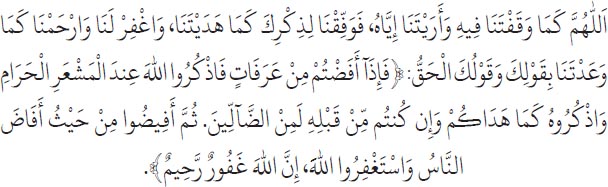
Allāhumma kamā waqaftanā fīhi wa araytanā iyyāh, fa-waffiqnā li-dhikrika kamā hadaytanā, wa-ghfir lanā wa-rḥamnā kamā wa‘adtanā bi-qawlika wa qawluka-l-Ḥaqq: Fa-idhā afaḍtum min ‘Arafātin fa-dhkuru-llāha ‘inda-l-mash‘ari-l-ḥarāmi wa-dhkurūhu kamā hadākum wa in kuntum min qablihi la-mina-ḍ-ḍāllīn, thumma afīḍū min ḥaythu afāḍa-n-nāsu wa-staghfiru-llāh, inna-llāhu Ghafūru-r-Raḥīm.
When performing the Ṣubḥ ṣalāh on this day, the pilgrim should perform it at the start of its time and go to great lengths to do it early. Then he should go to the Holy Sanctuary, which is a small mountain at the farthest point of Muzdalifah, called Quzaḥ, with a ḍammah on the qāf and a fatḥah on the zāy. If he can, he should ascend it; if he cannot, he should stand below it facing the Ka‘bah. He should say takbīr, tahlīl, declare His unity and say tasbīḥ, and recite abundant talbiyah and du‘ā’. It is mustaḥabb to say: O Allah, as You have given us ability and You have made us see it, so give us the ability to remember You as You have guided us. Forgive us and have mercy on us as You have promised us. Your Word is the truth: “Then when you pour down from (Mount) ‘Arafāt, celebrate the praises of Allah at the sacred monument, and celebrate His praises as He has guided you, though you were astray before. Then pass on at a quick pace from the place whence it is usual for the multitude so to do. And ask for Allah’s forgiveness, for Allah is Oft-Forgiving, Most Merciful.” [11].