
Remembrance 34 from Chapter 337
Supplications (da‘awāt) which are mustaḥabb at all times
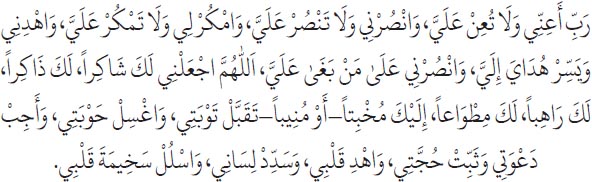
Rabbī a‘innī wa lā tu‘in ‘alayy, wa-nṣurnī wa lā tanṣur ‘alayy, wa-mkur lī wa lā tamkur ‘alayy, wa-hdinī wa yassir hudāya ilayy, wa-nṣurnī ‘alā man baghā ‘alayy. Allāhumma-j‘alnī laka shākirā, laka dhākirā, laka rāhibā, wa laka miṭwā‘ā, ilayka mukhbitā—aw munībā. Taqabbal tawbatī, wa-ghsil ḥawbatī, wa ajib da‘watī, wa thabbit ḥujjatī, wa-hdi qalbī, wa saddid lisānī, wa-slul sakhīmata qalbī.
We relate in the Sunans of Abū Dāwūd, at-Tirmidhī and Ibn Mājah that ‘Abdullāh ibn ‘Abbās  reported that the Prophet
  used to make du‘ā’ saying: “O my Lord, help me and do not assist [others] against me; [48]. aid me and do not aid [others] against me; [49].plot for me and do not plot against me; [50]. guide me and make guidance easy for me; and help me against those who harm and oppress me. O my Lord, make me grateful to You, remembering You, fearful of You, obedient to You, and submissive—or repentant—to You. Accept my repentance and wash away my sins; accept my supplication and establish my proof. [51]. Guide my heart, make my tongue righteous, and remove my heart’s vile traits.” [52].